

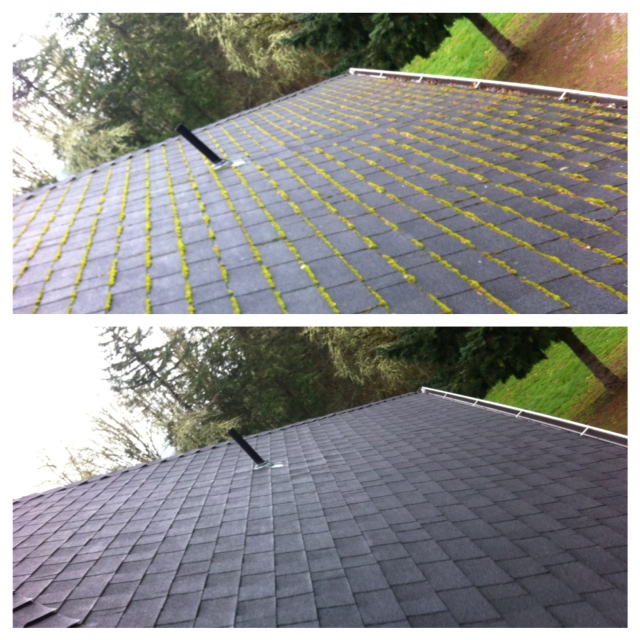
Scraping moss off a roof is the easy part. Any homeowner with a ladder and a stiff brush can do it for an afternoon, and it'll look clean for a few months. The part that actually matters — the part that separates a real treatment from a temporary fix — is what happens to what's left behind after the visible moss is gone: the spores and root structure still sitting in the shingle, ready to grow right back the next wet season.
Scraping vs. treating
Physical removal — brushing or a careful low-pressure rinse — takes the moss you can see off the roof. That's necessary, but it's not the whole job. Moss spores are always in the air in this climate, and whatever root structure is left in the shingle after a scrape-only cleaning is exactly what regrows first. A cleaning without treatment is a haircut, not a fix.
What treating at the root actually means
We apply an eco-friendly, US-made treatment before the moss ever comes off — the treatment goes down first, loosens the moss's hold on the shingle, and keeps working after removal to kill what's still rooted in. The active ingredient is potassium salts of fatty acids — essentially a soap — blended with biodegradable surfactants that let it grip the shingle and keep working instead of rinsing off in the first hard rain.
"We have been using this stuff for years and it works better than anything else we have seen on the market so far."
— Jesse Rice, from an early JNR blog post
Why it takes about a month
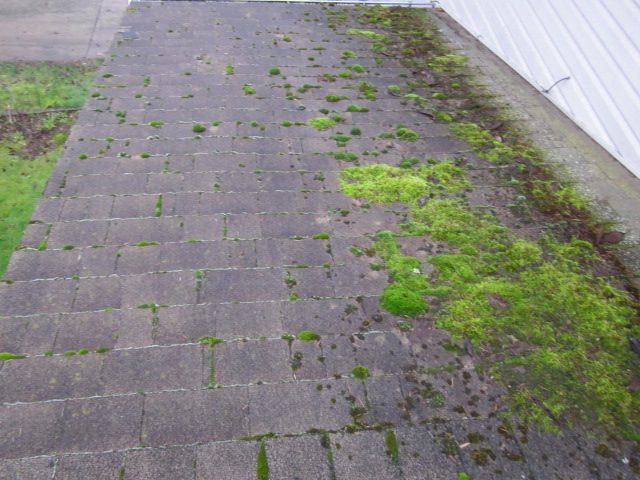
Moss removal itself is immediate — the moss physically comes off the shingle the day we're there. The organic treatment that keeps it from coming back is slower: it needs about a month to fully soak in and kill the spores at the root, rather than just knocking back what's visible on the surface. That's a deliberate trade-off. A slower-acting treatment that actually kills at the root beats a fast one that just scrapes the surface and lets moss grow back sooner.
Why not just scrape it every year?
Because it's harder on the roof, not easier. Every time a roof is brushed or pressure-washed without treatment, you're removing a little bit of the granule surface along with the moss — and moss that isn't killed at the root just comes back, meaning you're doing that abrasive work again and again. A handful of things make the difference:
- Treat before you remove — softening the moss's grip first means less abrasive scraping to get it off.
- Kill the spores, not just the surface growth — otherwise you're back on the roof in a few months, not a year.
- Use a product with surfactants — plain water-soluble treatments rinse off before they finish working.
- Stay on a yearly schedule — treating before regrowth is easier on the roof than removing after it.
This is also the reason we don't sell zinc strips as a moss solution — we cover why in a separate breakdown of zinc strips, but the short version is that a strip at the ridge only treats the water that happens to run past it, which isn't the same as treating the whole roof at the root. If you're dealing with moss that keeps returning no matter what you try, our roof cleaning & eco-friendly moss treatment page walks through how we handle it start to finish.
Frequently Asked Questions
What products do you use, and do you install zinc strips?
Will I see results right away, or does the treatment take time to work?
How long do you guarantee moss won't come back?
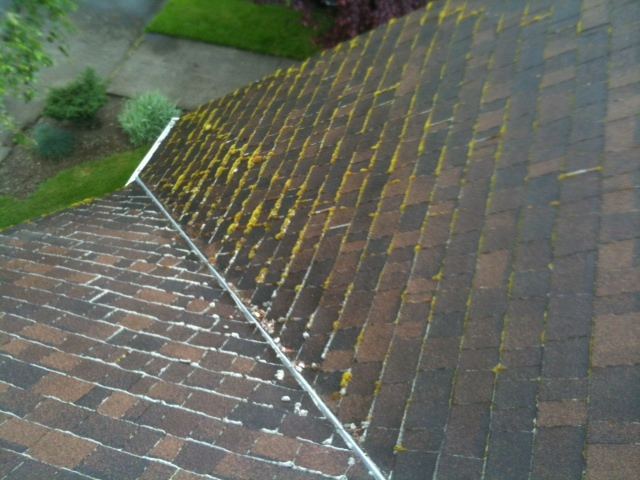
A roof that looks clean for one summer isn't the goal — a roof that stays clean is. If your moss keeps coming back no matter how many times you've scraped it, that's a sign it was never actually treated. Call and I'll tell you the difference.
— Jesse