

"Eco-friendly" is one of those phrases that's been used so loosely in home services that it doesn't mean much on its own anymore. So here's the plain version of what's actually in our treatment, what it doesn't have in it, and why that distinction matters more than the label.
What's in the tank
Our roof treatment is a US-made, eco-friendly product. The active ingredient is potassium salts of fatty acids — essentially a soap, not a poison — blended with biodegradable surfactants that help it grip the shingle and keep working instead of rinsing off in the first hard rain. It's labeled safe for waterways, fish, gardens, plants, and animals, not just "safer than bleach." Applying it requires Jesse to hold an Oregon Dept. of Agriculture Commercial Chemical Operator license (#AG-L1056261-CPO) — this isn't a garden-hose product, even though it's gentle enough to use around a vegetable bed.
What we don't use, and why
The other roof-treatment products you'll see recommended online — zinc sulfate, bleach, peroxide — get used because they're cheap, not because they're better.
"It is cheap though, which is why other companies use it. Kills fish and gets into our waterways, very toxic to breath, bad for plants and animals. We have a much safer and much more effective treatment option."
— Jesse Rice, from an early JNR blog post
Zinc sulfate is a fine powder that mostly rinses off a roof in the first hard rain — which, this being Portland, doesn't take long — and it's genuinely unpleasant to work with: toxic to breathe while applying it, and rough on the plants, pets, and fish in anything it runs off into. Bleach and peroxide both are hard on shingles and landscaping over repeated use, which matters on a roof you're supposed to be treating every year, not once.
Moss vs. algae staining
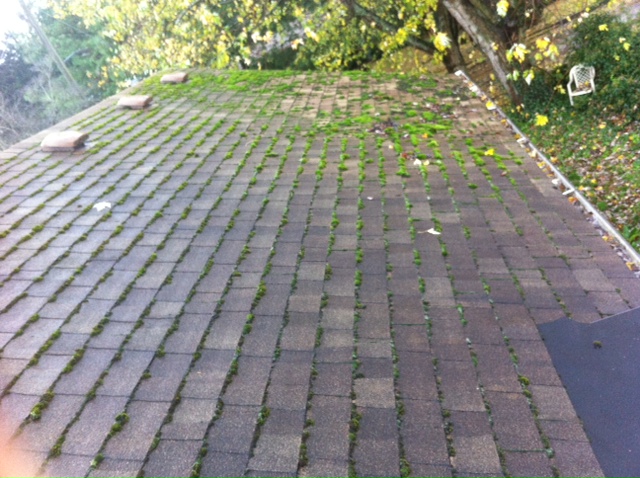
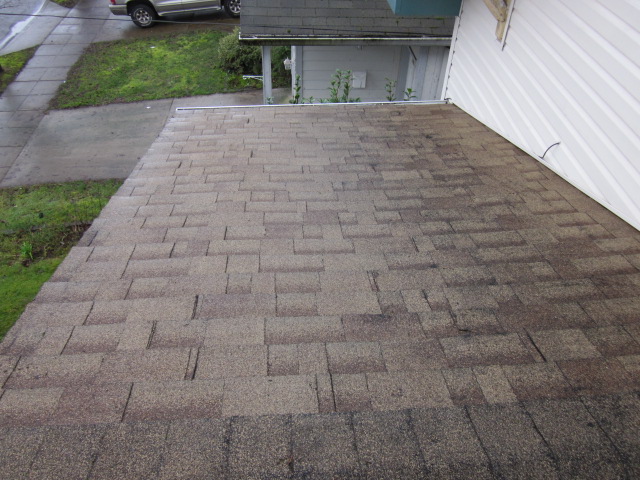
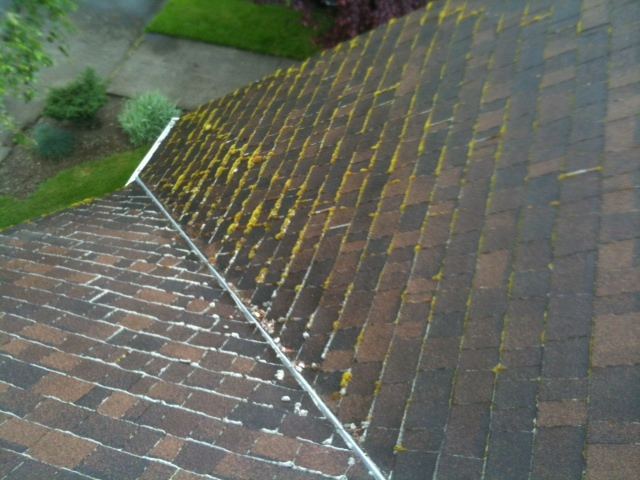
Moss and black algae staining aren't the same problem, but they show up on the same roofs and get treated on the same visit. Moss roots into the shingle and holds moisture against it. Algae staining is more cosmetic — dark streaking that doesn't do the same structural damage — but it still responds to the same eco-friendly treatment, which is one more reason we don't reach for a second, harsher product just to handle staining.
What it costs you to use a gentler product
Nothing, in terms of results — but it does cost a little more time. The organic treatment needs about a month to fully soak in and kill spores at the root, compared to a faster-acting caustic product. That's a trade we make on purpose:
- Kills at the root, not just the surface — a fast product that only knocks back visible growth means faster regrowth too.
- Safe around kids, pets, and gardens — you don't need to keep anyone off the property for days after treatment.
- Doesn't shorten shingle life — no caustic buildup working against the roof you're trying to protect.
- Doesn't damage what's downhill — waterways, landscaping, and neighboring yards aren't collateral damage from runoff.
If you're extra cautious around a vegetable garden, the standard treatment is still a safe bet — it's US-made and labeled safe for gardens, plants, and animals — and we keep overspray to a minimum on the areas closest to your beds.
The short version: "eco-friendly" isn't a marketing word here, it's a licensing requirement and a formula we can actually describe. Our roof cleaning & eco-friendly moss treatment page walks through how a full job goes from first look to the emailed report.
Frequently Asked Questions
Is the treatment safe for my plants and pets?
I'm still worried about my vegetable garden — is there a gentler option?
Are you licensed, bonded, and insured?
I've been asked more than once why we don't just use the cheap stuff like everybody else. Because it's cheap for us and expensive for your yard, your fish pond, and your shingles. Ask me what's actually in the tank before you hire anyone — not just us.
— Jesse