


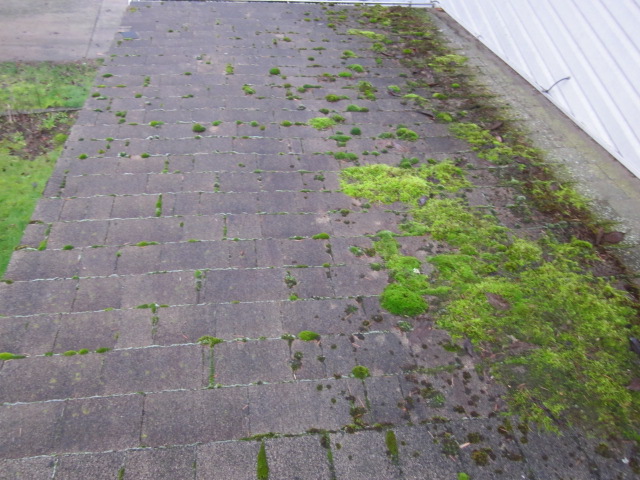
Zinc strips show up in almost every "how to get rid of roof moss" article you'll find online. Nail a strip of zinc metal along the ridge, the theory goes, and rainwater carries trace zinc down the roof, killing moss as it goes. It's cheap, it's a weekend project, and it sounds reasonable. I don't believe it works, and I've been saying so for as long as I've been cleaning roofs in Portland.
What zinc strips are supposed to do
The idea isn't crazy on paper — zinc is genuinely toxic to moss and algae in high enough concentration. The problem is getting enough of it onto the roof, evenly, for long enough to matter. A strip at the ridge only treats the water that happens to run past it, and Portland roofs don't shed water in a neat, even sheet — they shed it in whatever path the shingle lines and valleys send it.
"I don't know how they can legally be sold. They don't work, they have to be put in with nails, they break, look ugly, make noise."
— Jesse Rice, Owner, JNR Industries
That's the plain version of why we don't install them. Beyond the coverage problem, putting a zinc strip on a roof means driving nails through the shingles to hold it in place — nail holes on a roof are never a good trade for a strip of metal that may not even be doing much. The strips themselves don't hold up well either: they rip loose in wind, corrode and go patchy, and rattle in a storm.
Reasons we don't install zinc strips, in short:
- Uneven coverage — a strip at the ridge only treats the water that happens to run past it, and Portland roofs don't shed water in a neat, even sheet.
- Nail holes — mounting a strip means driving nails through your shingles, trading a leak risk for a fix of unproven value.
- They don't hold up — strips rip loose in wind, corrode and go patchy, and rattle in a storm.
- No real fix for the root cause — moss spores are always in the air here; a strip doesn't treat what's already growing.
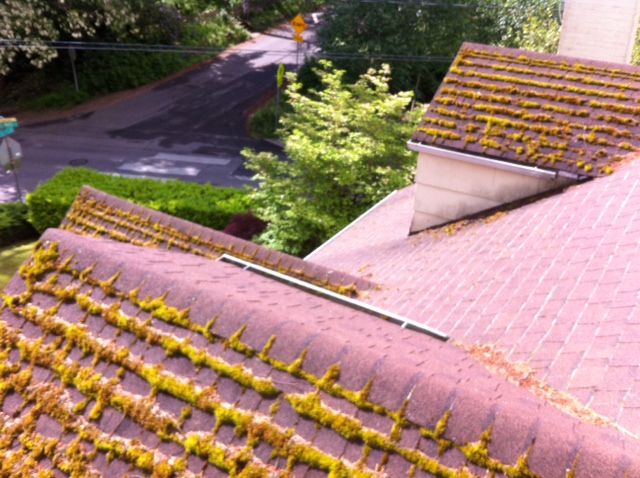
The other product people compare it to: zinc sulfate
The other zinc-based option you'll see recommended is zinc sulfate powder, sold as a broadcast moss killer. We don't use that either. It's a fine powder that mostly rinses off the roof in the first hard rain — which, this being Portland, doesn't take long — and it's genuinely unpleasant stuff: toxic to breathe while applying it, and rough on the plants, pets, and fish in anything it runs off into. None of that squares with doing a job on someone's house that they, their kids, and their dog are going to be living under and around.
What we use instead
Our treatment is a US-made, eco-friendly product — the active ingredient is potassium salts of fatty acids, which is essentially a soap. It's labeled safe for waterways, fish, gardens, plants, and animals, and it works by actually treating the moss where it's growing rather than relying on rain to distribute a strip's worth of metal ions down the whole roof. We don't use bleach or peroxide alongside it either — some competitors do, and both are hard on shingles and landscaping over repeated use.
Annual treatment beats a permanent fix.
There's no such thing as a one-time, install-it-and-forget-it moss solution — not zinc strips, not anything else. Moss spores are always in the air here. Annual treatment paired with regular gutter cleaning is the most reliable way we've found to keep a roof clean year over year, and it's the healthiest thing for the shingles: no nail holes, no gamble on whether a strip is doing anything at all.
A note on the history here
Zinc strip installation used to be priced by the foot back when more companies still offered it, from what I've seen quoted historically. We don't install them at any price, for the reasons above; if a company quotes you zinc strips as your moss solution, it's worth asking what they'd recommend instead once the strips inevitably need replacing.
If you're dealing with active moss right now, our roof cleaning & eco-friendly moss treatment page covers the full process, and the roof maintenance plan covers what an annual schedule actually looks like. If you've got a specific question that isn't answered here, the FAQ is the fastest way to find it.
Frequently Asked Questions
Do zinc strips actually work on roof moss?
Is JNR's alternative treatment safe for my pets and plants?
Is moss actually harmful if I just leave it alone?
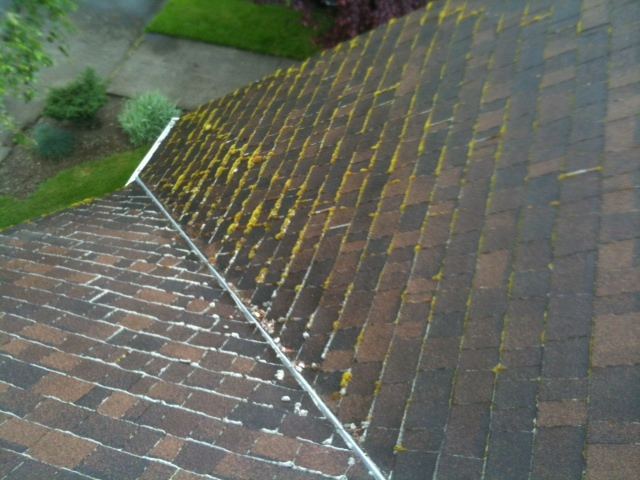
If a strip of metal on the ridge really killed moss, I'd sell them myself. I don't, because I've pulled too many rusted-out strips off roofs that were just as mossy as the one next door. Call or text me a photo before you nail anything to your roof — I'll tell you straight what actually works.
— Jesse