


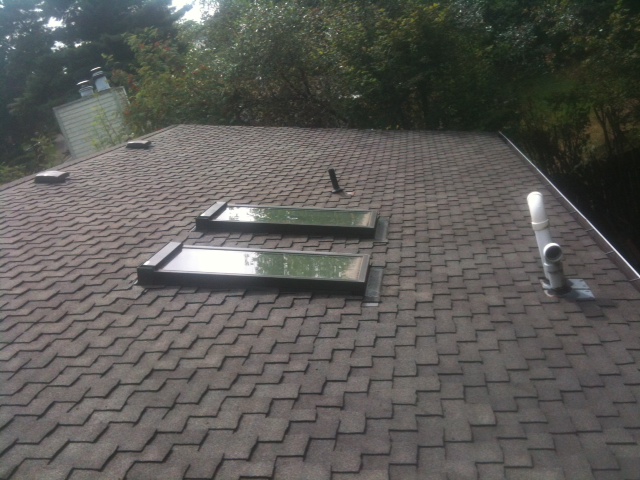
Fifteen-plus years of Portland roofs, and the pattern hasn't moved: more leaks trace back to a pipe jack than to anything else we find. Not a torn shingle, not a bad valley, not storm damage — a small rubber collar around a plumbing vent pipe, quietly failing where nobody's looking.
What a pipe jack actually is
Every house has plumbing vent pipes running up through the roof — usually two or three of them, small (2–4 inch) pipes that let sewer gas escape and let air into the drain system so water flows properly. Where each pipe passes through the roof deck, it's sealed with a pipe jack: a metal or plastic base plate flashed into the shingles, with a rubber boot that collars tightly around the pipe itself.
Why the collar fails first
That rubber boot takes the worst of Portland's weather cycle — direct sun in summer, freeze-thaw in winter, rain the rest of the year — for as long as the roof is up there. Rubber dries out and cracks with age the way any rubber gasket does, and once it splits, there's a direct path for water right at the pipe. It's usually a small failure, which is exactly why it's easy to miss until it's not: a slow drip above a bathroom or laundry room can go a long time before anyone notices the stain.
The #2 cause: exposed top nails
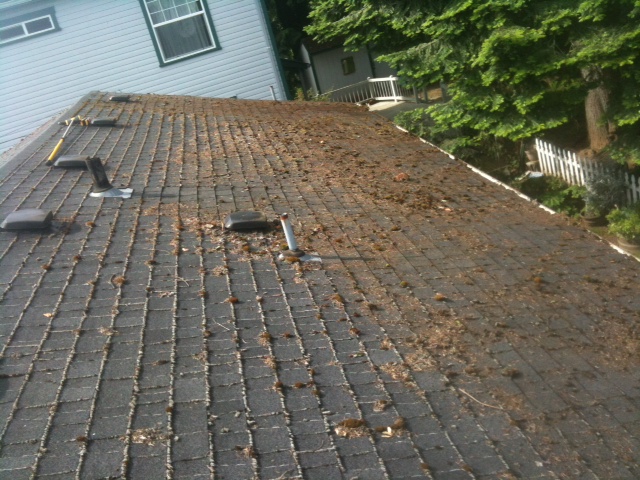
Right behind pipe jacks are exposed top nails — nail heads that were left uncovered by the shingle course above them, whether from the original install or from wind lifting a shingle edge over time. Left exposed to the weather, the nail head rusts and the tiny gap around it works open, and that's a second direct path for water. We reseal or replace those before they become a problem, same as the pipe boots.
Ridge caps and flashing
The cap shingles running along the peak of the roof take more weather exposure than almost anywhere else — full sun, full wind, first to catch driving rain — so they're often the first shingles to crack, curl, or go missing. And anywhere two roof planes meet, or a roof meets a wall — chimneys, skylights, valleys — is where flashing failures show up as leaks somewhere inside the house, sometimes well away from where the water actually got in.
"Start small — for one, it'll save you money, and we may be able to fix or stop the leak without a large restoration project."
— Jesse Rice, Owner, JNR Industries
How we catch it before it's a leak
Every job we do — cleaning or repair — includes a full, photo-documented roof inspection emailed to you afterward. That means the pipe boots, nail heads, flashing, and ridge caps get an actual look every time a crew is up there, not just when something's already dripping into the attic. When we spot something small during a routine cleaning, we fix it on the spot instead of letting it turn into a bigger leak call later. On every roof, that inspection checks the same short list:
- Pipe jack rubber boots — the #1 leak source, cracking from sun and freeze-thaw cycling.
- Exposed top nails — nail heads left uncovered by the shingle course above, rusting open over time.
- Ridge caps — the most weather-exposed shingles on the roof, first to crack or curl.
- Flashing at valleys, chimneys, and skylights — wherever two roof planes meet is where leaks most often start.
And if a roof already has an active leak when we get there, the repair happens before any cleaning — there's no point washing a roof that's still letting water in underneath. Track record on leak repairs has been a 100% success rate, and the work is guaranteed.
What this means for your maintenance schedule
If your roof hasn't had an inspection in a year or two, a pipe jack that's starting to crack is exactly the kind of thing that's invisible from the ground and cheap to catch early. It's also exactly the kind of thing a routine cleaning visit already covers — see the roof maintenance plan for how often that should happen, or go straight to roof repairs & leak repairs if you already know something's wrong. Either way, estimates explains how we look at a roof before quoting anything.
Frequently Asked Questions
Your site says free estimates — why do you charge for some leak estimates?
Do you repair roofs, or just clean them?
Do you guarantee your repair work?
What do I get after a repair or inspection?
Not sure if your pipe boots are shot? Text me a photo — I'll tell you straight whether it's a five-minute fix or something to keep an eye on.
— Jesse