

Getting three bids before you hire anyone to work on your roof is smart. Comparing those three bids on price alone is how people get burned. A roof cleaning or moss treatment job can look identical on paper — same scope, similar price — while one company is fully licensed and insured and the other is a truck, a hose, and no real accountability if something goes wrong.
The three things to actually verify
Before you compare a single dollar figure, check three things on every company you're considering:
- Oregon CCB registration — you can check this yourself at oregon.gov/CCB. A legitimate contractor will have an active registration number and won't hesitate to give it to you.
- Oregon Department of Agriculture licensing — anyone applying moss prevention or treatment chemicals in Oregon is required to hold a Commercial Chemical Operator license. This one's easy to skip past because it sounds like paperwork, but it isn't optional, and plenty of "roof cleaning" outfits don't have it.
- Workers' comp insurance — if the company has employees working on your roof, they need to be covered. If they're not, and someone gets hurt on your property, that liability can land closer to you than you'd expect.
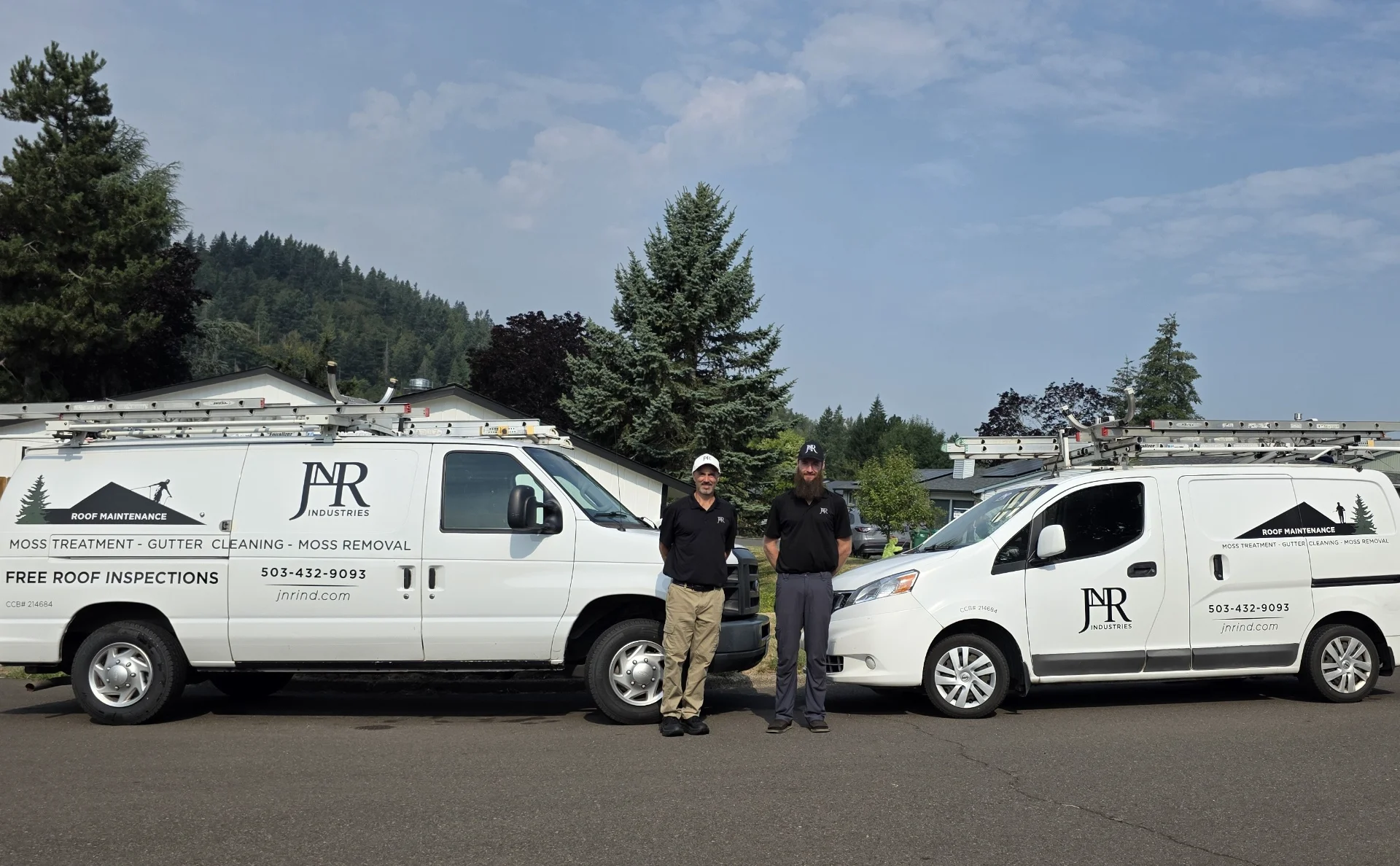
We're covered on all three — CCB# 214684, Commercial Chemical Operator #AG-L1056261-CPO, and workers' comp — and any legitimate competitor should be able to say the same without hesitation.
"I received quotes from several area businesses, including those without a CCB license… Jesse and JNR Industries offered a greater level of service at a better price when comparing other companies… JNR's quote was more than fair, the responsiveness to email requests, as well as respecting my irregular work hours, and the quality of the work are nothing less than stellar."
— Amy, Google review
Why licensing matters more than it sounds like it should
Oregon requires anyone applying moss treatment to be licensed by the Department of Agriculture for a real reason: it's a customer protection, not red tape. An unlicensed applicator isn't accountable to that state oversight if something goes wrong — a treatment applied incorrectly, runoff that damages landscaping, a chemical that isn't what it's labeled as. Checking that license, alongside CCB registration and workers' comp, is the fastest way to tell a legitimate company from a truck-and-a-hose operation before you've signed anything.
Workers' comp economics: why the cheapest bid is sometimes the reason to worry
Workers' comp for roof work isn't cheap to carry — it's a high-risk class code, and legitimate companies pay real premiums for it. That cost shows up in every legitimate bid. When a bid comes in dramatically lower than the other two, it's worth asking directly whether the crew is actually covered, because that's one of the easiest costs to cut if a company is willing to skip it. Great work isn't cheap, and cheap work isn't great — and insurance is one of the places that difference actually lives.
We'll match a legitimate competitor's price.
In the past, we've matched pricing against other companies — but only if that competitor can show active CCB registration, workers' comp insurance, and Department of Agriculture chemical-applicator licensing. It's a way of making sure a price comparison is apples-to-apples, not us against an unlicensed operation underbidding on purpose.
Questions worth asking before you sign anything
- Can you give me your CCB number and ODA applicator license number right now?
- Do you carry workers' comp for everyone who'll be on my roof?
- What exactly is in the treatment, and is it safe for my plants, pets, and any water runoff?
- Does the bid include a written inspection, or just the cleaning?
- What happens if you find a leak or damage while you're up there?
A bid that can't answer those cleanly isn't necessarily a scam — but it's a bid you should slow down on. For more on how we handle pricing and what a fair estimate looks like, see estimates, or check the FAQ for the full licensing and pricing breakdown. If you'd rather just ask us directly, get in touch and we'll walk through it.
Frequently Asked Questions
What should I look for when comparing roof cleaning bids?
Do you price-match other roofing companies?
Do you come out to look at the roof before quoting?
How much does a roof cleaning cost?
If a bid seems too good to be true, ask why. I'd rather lose the job to a company that can actually answer those three questions than win it against one that can't — because you're the one stuck with whoever ends up on your roof.
— Jesse