

Pressure washing gets a deck, driveway, or walkway looking clean fast — that's what makes it satisfying to watch. But the pressure washer only knocks loose what's sitting on top of the surface. It doesn't touch the roots of the mold, algae, and moss underneath, and here in Portland those roots are back in business the next time it rains. That's why we don't treat washing as the whole job. It's half of it.
Why a wash alone doesn't last
Concrete, wood, and pavers all hold moisture in their surface texture, and Portland's wet season keeps feeding that moisture all winter long. Mold, algae, and moss don't need much of an invitation — they just need something damp to grow on, and a freshly washed surface with no protection is exactly that.
"Water is just food for mold and moss."
— Jesse Rice, Owner, JNR Industries
That's the reasoning behind treating a surface after we wash it instead of washing it and calling it done. Once it's clean, we treat it with the same safe, US-made approach we use on roofs — no zinc, no bleach, no peroxide — so moss and algae don't just move back in with the next rain. It also means less pressure washing overall, and that's a good thing on its own: every pass of a pressure washer is a little bit abrasive on whatever it's cleaning, so the less often a surface needs it, the better that surface holds up.
What we wash — and treat — around a property
Not everything takes the same pressure, and not everything needs treating the same way. We adjust the tip, the distance, and the technique for the surface in front of us, then treat what makes sense to protect:
- Driveways — moss and algae turn concrete slick and dingy; we clean it back to bare concrete.
- Decks — a low-pressure nozzle built for wood, not concrete, so we don't chew up the grain or blow the finish off the boards.
- Patios — stone, pavers, or concrete, cleaned without leaving pressure-washer scarring or stripe marks behind.
- Walkways & sidewalks — the single most common call we get, and covered more below.
- Siding — washed carefully around trim, windows, and outlets, not blasted in a way that forces water where it shouldn't go.
- Fences, awnings & pool decks — we'll do the whole property in one visit if that's what you want; around a pool, we press water and dirt away from it, not into it.
Decks: a closer look
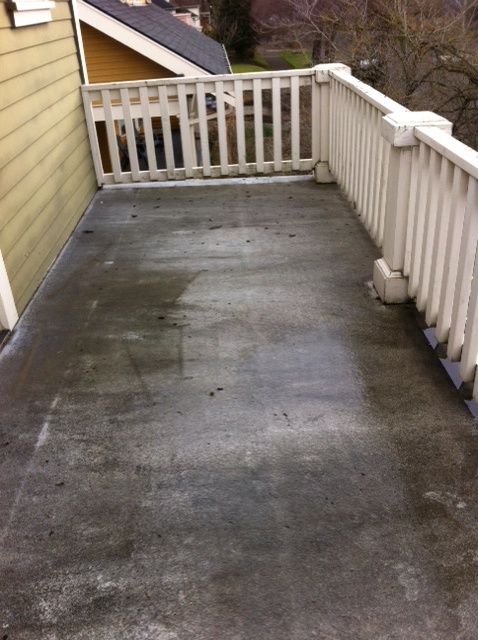
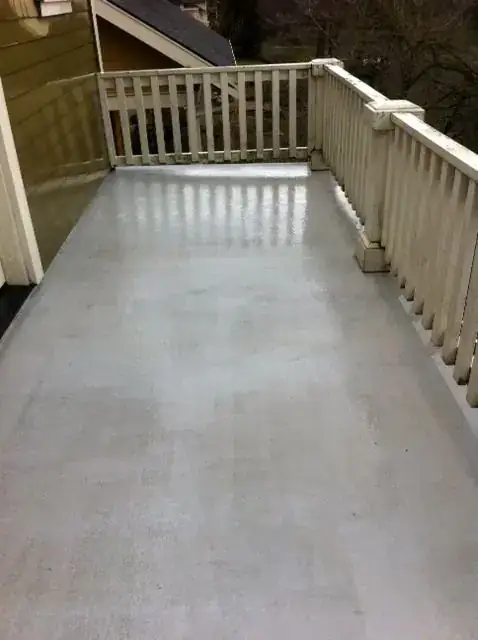
Decks are where the wash-then-treat difference shows up most clearly, because a deck takes direct weather exposure and direct foot traffic at the same time. Wash it and walk away, and the surface looks good for a few weeks before moss and mildew start staining back in along the grain and the shaded rail lines. Wash it and treat it, and it holds that clean look a lot longer — which means fewer return visits and less wear on the wood itself.
The safety reason: slippery surfaces
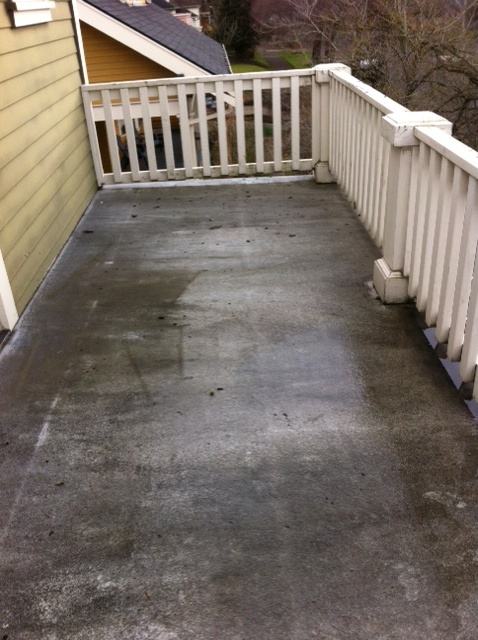
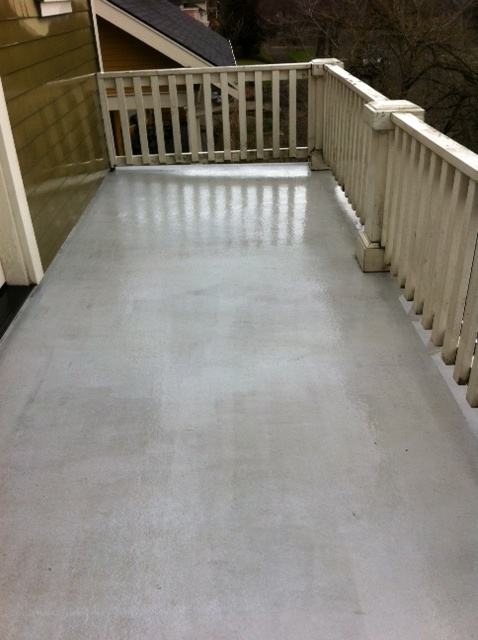
Getting moss and algae off isn't only cosmetic. Portland's wet season turns a moss-covered walkway, deck, or set of steps into something genuinely dangerous to walk on — that slick green film is exactly what people slip on. We've built up 25+ years of ground-washing experience seeing which surfaces get slick first: shaded walkways, north-facing steps, and anywhere water sits instead of draining. Getting the moss and algae off there isn't just about looking nicer — it's the difference between solid footing and a fall.
Curb appeal — and selling a house
A clean driveway, deck, patio, and set of siding is one of the fastest, cheapest ways to improve how a listing photographs. Buyers notice grime before they notice anything else about a house's exterior. Pair a pressure-washing visit with a roof cleaning and the whole property reads like a different house — which is exactly the kind of job that comes up most often when a homeowner is getting ready to sell.
Driveway sealing after the wash
For driveways specifically, sealing after a wash keeps moss and algae from moving back in, protects the concrete from weather and traffic, and helps it stay looking clean longer. There's a choice of finish — clear coat, wet look, or a glossy finish. Glossy has always been my favorite; it's the one that makes a driveway actually look wet-clean even once it's dry.
How pressure washing is priced
We charge hourly for pressure-washing work. We walk the property first and give a straight estimate of the time involved before we start, so there's no surprise bill at the end. Every job also gets the same standard we hold roof cleaning to: we tell you honestly what a surface needs, not what's easiest to upsell.
If you're weighing washing against washing-and-treating for your own property, our pressure washing page walks through every surface we handle, and the roof maintenance plan covers how that same treat-it-annually logic applies up on the roof. Questions about scheduling or pricing are covered on the FAQ.
Frequently Asked Questions
Why treat a surface after it's been pressure washed?
Will pressure washing damage my deck or siding?
Do you pressure wash driveways and walkways too, or just decks?
Is the post-wash treatment safe for pets, plants, and kids?
Washing something and walking away is the easy half of this job. Treating it so it stays clean is the half that actually saves you money over time — fewer washes, less wear on the surface. If you're not sure whether your deck or driveway needs a wash, a treatment, or both, send me a photo — I'll tell you straight.
— Jesse