

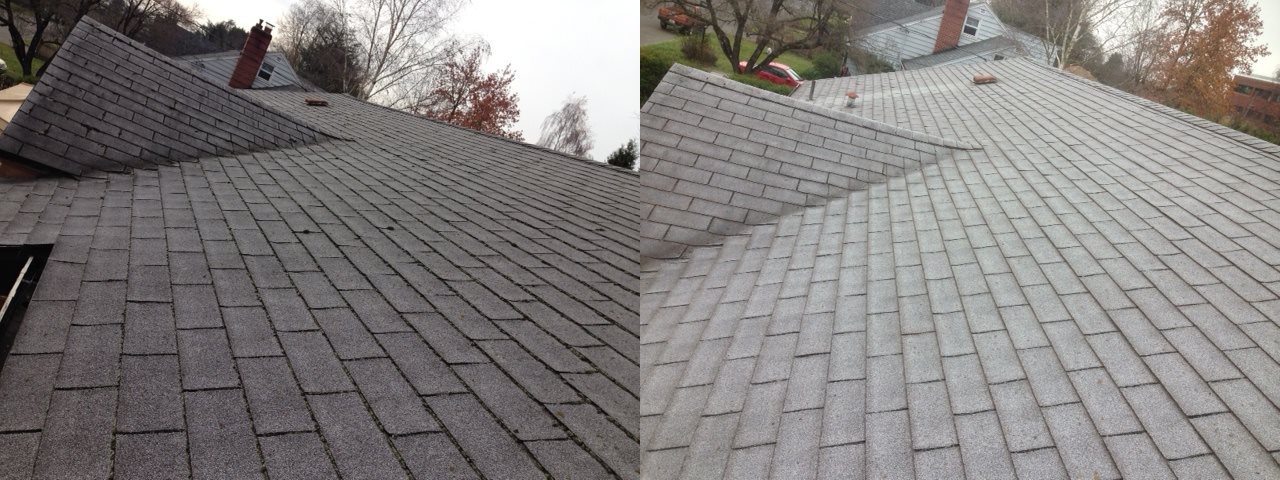
We get this call a lot: a 3-tab roof that's a little worse for wear, moss creeping into the courses, and a homeowner who isn't ready to spend on a full replacement yet. In a lot of cases, that roof has more life left in it than it looks like from the ground — the question is what a cleaning-and-repair pass can actually buy you, and when it can't. It's one of the more common calls we get, and it's rarely a simple yes-or-no answer until someone's actually looked at the roof.
What a 3-tab roof is built for
Old 3-tab shingles were typically designed for around 15 years of service life. That number was never a hard cutoff — how the roof has been maintained changes it more than the shingle itself does. Moss that's been left to sit, debris packed into the courses, and small repairs that never got done all shorten a roof's working life well before the shingles are actually finished.
Brushing vs. low-pressure — matching the method to an older roof
On an older, more brittle roof, we don't default to one cleaning method. Some sections come clean fine with hand brushing; others — heavier moss, black algae staining — need a low-pressure wash to actually lift it. We use whichever is safer for that specific roof, sometimes both on the same job, and never a high-pressure blast, which strips granules and shortens the life of shingles that are already older. A roof that's been neglected for years often needs more of both than a roof that's been kept up annually, simply because there's more built-up growth to remove before the treatment can do its job.
"Such great service from JNR! Pleased with their work, their price and their customer service. We have lots of trees… and our roof looks the best it has looked in the 25 years we have lived here."
— Julia Petersen, Yelp review
What we do beyond just removing the moss
A full pass on an older roof isn't just moss removal. Depending on what we find, a typical visit covers:
- Moss removal by whichever method — brush or low-pressure wash — is safest for that roof
- Gutter cleaning, so water is actually draining the way it's supposed to
- The eco-friendly, US-made treatment, to keep moss from re-establishing
- Sealing exposed top nails before they rust open into a leak point
- Recaulking flashing around the chimney and anywhere else it's come loose
- Any other small repairs we find along the way, with before-and-after photos so you know what needed doing before we touch it
When cleaning isn't the right call
We're upfront if a roof doesn't clear that bar. If cleaning and sealing won't buy meaningful years back, we'll tell you that instead of taking the job — that's true whether it's a 3-tab or any other roof type. We don't do roof replacements ourselves, which means there's no upside for us in stretching out a job a roof doesn't need, or in talking someone into cleaning a roof that's actually done.
Getting the most years out of what you have
If your 3-tab roof is somewhere in the middle — not brand new, not obviously done — an honest look at it is the fastest way to know which side of that line it's on. See our roof maintenance plan for how a yearly treatment schedule keeps a roof like this from backsliding, or go straight to estimates for how we size up a roof before quoting anything. If something's already actively failing rather than just aging, roof repairs & leak repairs covers what that looks like.
Frequently Asked Questions
Do you repair roofs too, or just clean them?
Why does moss need to come off, and is it really harmful if I just leave it?
How long does a roof cleaning last?
What's included in a standard roof cleaning?
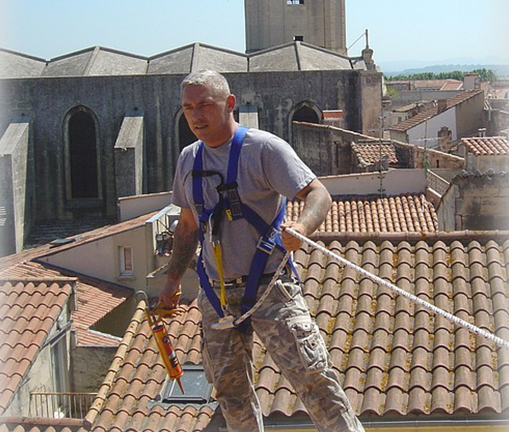
Got an older 3-tab and you're not sure if it's worth cleaning or time to start budgeting for a new one? Send me a photo — I'll tell you straight which one it is.
— Jesse