

A leak doesn't always mean we can fix it the same day — sometimes it means we need to stop the bleeding first, tarp it right, and come back with the material to do the actual repair. Both halves of that matter, and neither one is as quick as it sounds. Portland's rainy season isn't forgiving of a bad tarp job either; a sloppy one that lets water track underneath can do more damage over a few weeks than the original leak would have done on its own.
Why a quick tarp job isn't actually quick
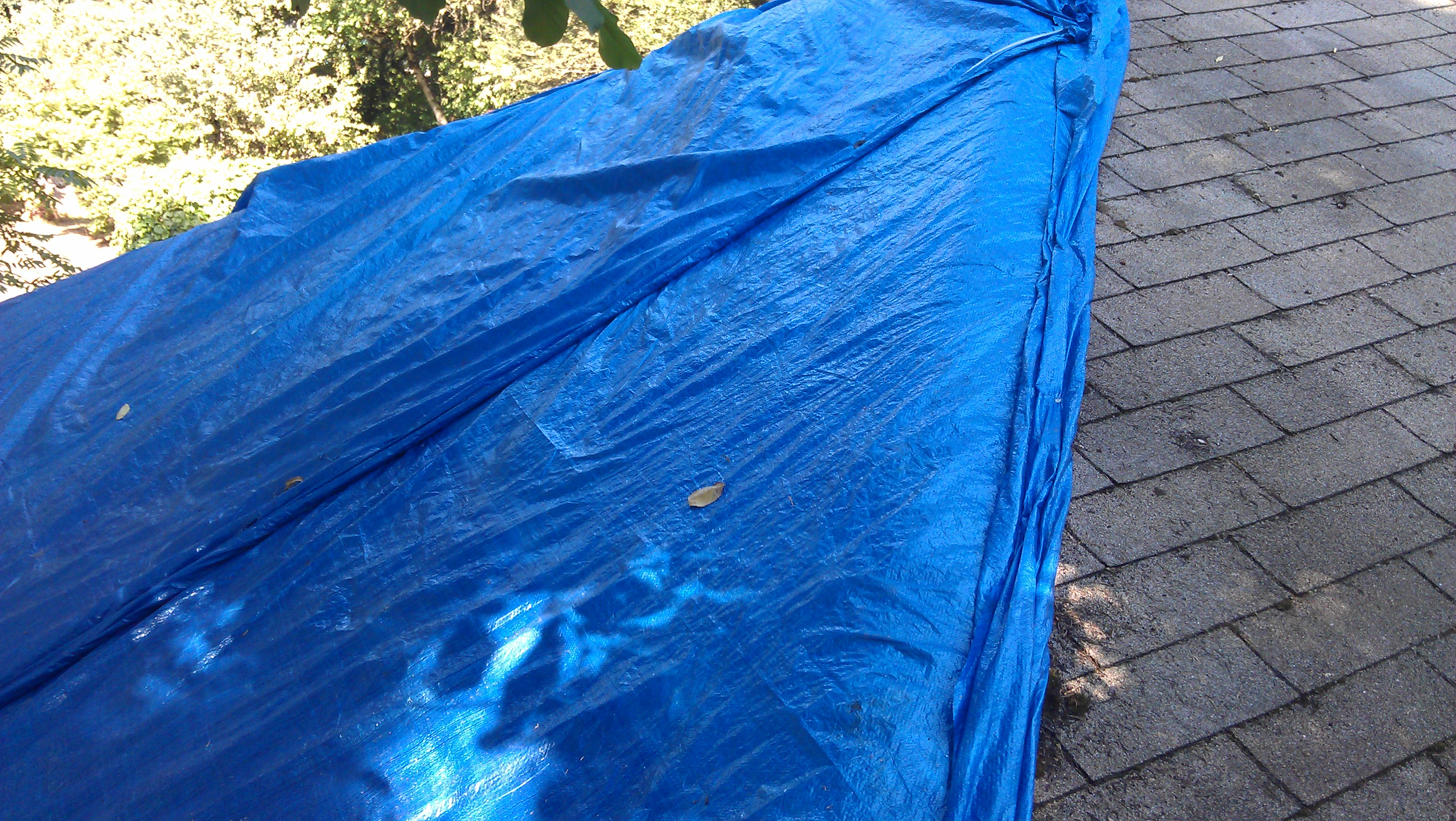
"It actually takes some time to tarp off a section of roof right for a temporary relief of the leak. I get the tarp tight, seal it down with flashing, and overlap the ridges so water doesn't get under it."
— Jesse Rice, Owner, JNR Industries
A tarp thrown over a leak and weighted down at the corners will move, flap, and let water track underneath the first time the wind picks up. Doing it right means pulling it tight, running flashing along the edges to seal it down, and overlapping it at the ridge so water can't work its way under — the same attention to detail as a permanent repair, just built to hold for weeks instead of years.
What a tarp job actually buys you
A tarp is a stopgap, not a fix. It buys time — time for us to get the right shingles matched and ordered, time for weather to cooperate, time so you're not choosing between a rushed patch and a soaked ceiling. It's not meant to be a long-term answer, and we'll tell you that upfront rather than let a tarp sit there for months as a substitute for the actual repair. If you're already seeing a tarp on a roof you're about to buy or inspect, that's worth asking the seller about directly — it usually means there's a known repair still waiting to happen.
What happens when we come back for the real repair
We do leak repairs and shingle replacements, and we do it right: a ballpark price up front, then pulling a piece of your existing roofing to match the material before anything gets replaced. Roof leak repairs and wind damage repairs in the Portland metro are a specialty of ours, not an afterthought to the cleaning side of the business. The tarp holds the line; the repair is where we actually fix what let the water in — a torn or missing shingle, a section of flashing that came loose in the same storm, or a spot where the decking underneath needs to be checked before anything gets nailed back down.
Color-matching the replacement shingles
When a section needs replacing — usually after wind damage tears a shingle loose — a mismatched patch is its own kind of eyesore. We come out, match the roofing to what's already up there, and fit the replacement in so it doesn't stand out as an obvious repair.
- A ballpark price up front, before any work starts
- A sample pulled from your existing shingles to match color and profile before we order material
- A clean fit, not a patch that announces itself from the street
- Photo documentation of what we found and what we did
Tarping vs. a full leak repair — which do you need
If it's actively raining into your house right now, that's a tarp call. If you've got a stain on the ceiling but no active drip, that's more likely a diagnosis-and-repair call — and tracking down exactly where a leak originates can take real time, sometimes an hour or more of climbing around and testing, which is part of why leak diagnosis is priced differently than a cleaning estimate. Either way, reach out and describe what you're seeing; we'll tell you which one applies. For everything else roof-repair related, see roof repairs & leak repairs, or estimates for how we price the work.
Frequently Asked Questions
Your website says free estimates — why do you charge for some leak estimates?
Do you guarantee your work?
Do you repair roofs too, or just clean them?
What do I get after the job is done?
Got a leak right now? Call or text me a photo of what you're seeing — if it needs a tarp today, we'll get you tarped tight before we ever talk about the permanent fix.
— Jesse